
Working Out Harder but Still Not Losing Weight? What Women Need to Know
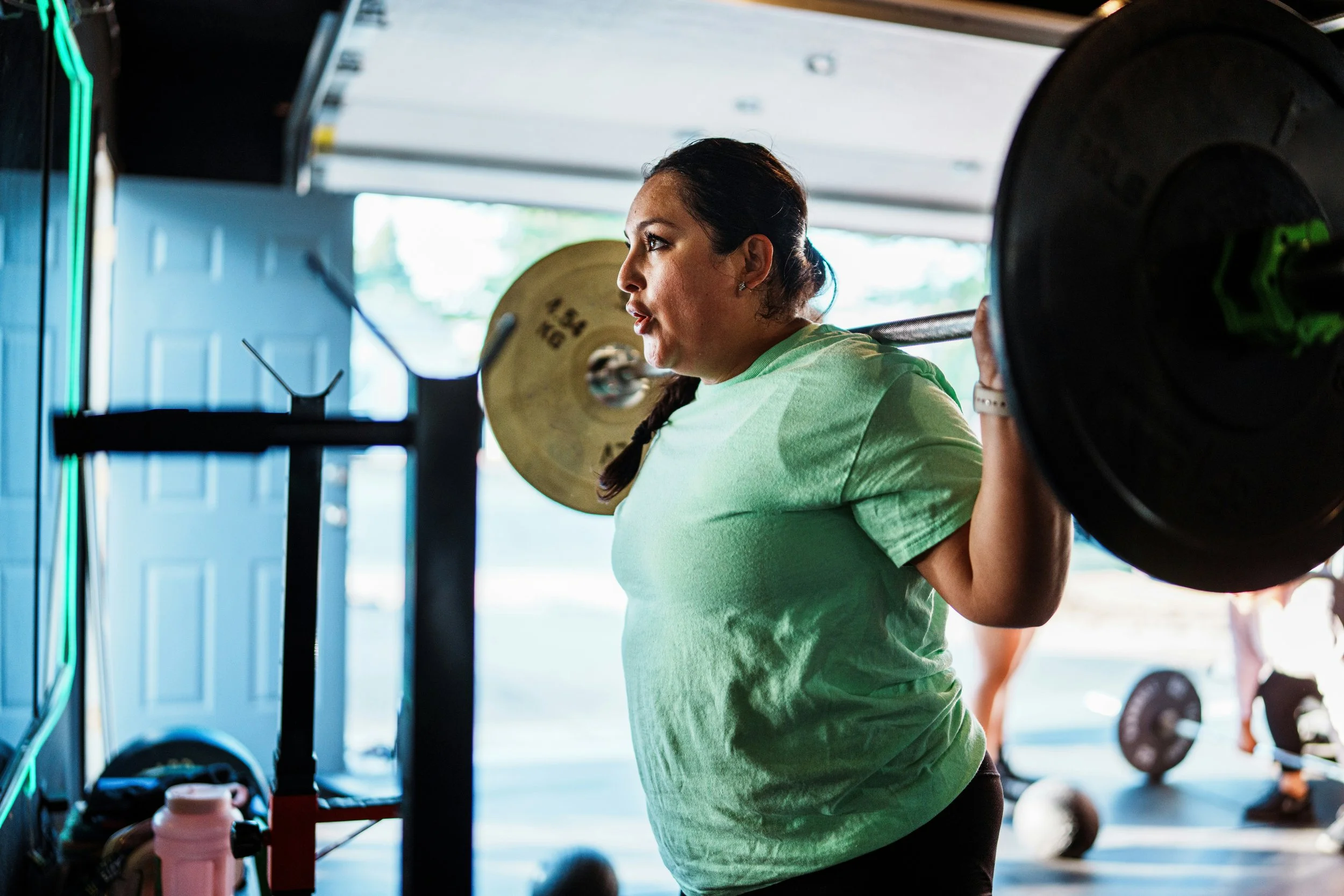
Have you been adding more cardio, pushing through harder workouts, or cutting another food from your diet—only to feel as though your body is refusing to change?
You are NOT lazy, undisciplined, or failing.
For many women, especially during perimenopause and menopause, weight loss becomes more complex than simply burning more calories. Hormonal changes, declining muscle mass, poor sleep, chronic stress, increased hunger, and inadequate recovery can all influence how your body responds to exercise.
This does not mean exercise is not working. Movement supports your heart, bones, brain, mood, blood sugar, strength, and long-term health—even when the scale is slow to respond. It may simply mean that doing more is not the same as giving your body what it needs.
Why harder workouts do not always create more weight loss
1. Your body may compensate for the energy you burn
The calorie number on a watch, treadmill, or fitness app is only an estimate. More importantly, the body can respond to a demanding workout by increasing hunger or reducing energy expenditure elsewhere. Your body is great adaptor.
You may sit more during the rest of the day, feel too tired for your usual walk, or become hungrier without consciously noticing it. Researchers call this energy compensation, and it helps explain why exercise-related weight loss is often smaller—and more variable—than a simple calorie equation predicts.
This is not a lack of willpower. It is a normal biological response, and it differs considerably from one woman to another.
2. Midlife hormones can change where your body stores fat
Menopause does not make weight gain inevitable, but the transition can change body composition. Research following women through the menopause transition found that fat mass tended to increase while lean mass decreased, with changes accelerating around the final menstrual period.
Declining estrogen may also favor a shift toward more abdominal or visceral fat. At the same time, aging, changes in activity, disrupted sleep, and gradual muscle loss can affect daily energy needs.
The answer is not to punish your body with more cardio. It is to protect the metabolically active tissue that becomes increasingly important in midlife: muscle.
3. You may be training hard but not building enough muscle
Cardio is valuable, but cardio alone is not a complete midlife fitness strategy. Progressive strength training helps preserve and build lean tissue, supports bone health, improves strength, and can improve body composition—even when total scale weight changes slowly.
It is also possible to lose fat while gaining or preserving muscle. In that situation, the scale may barely move even though your waist measurement, strength, clothing fit, and metabolic health are improving.
Instead of asking only, “How much weight did I lose?” also ask:
Am I becoming stronger?
Has my waist measurement changed?
Do my clothes fit differently?
Is my energy more stable?
Am I recovering well?
Are my blood pressure, glucose, or other health markers improving?
The scale is one measurement. It is not the whole story.
4. Too much intensity may be reducing your recovery
High-intensity exercise is not inherently bad, and it does not automatically “break your hormones.” But stacking hard workouts on top of work stress, caregiving, poor sleep, and under-eating can leave you exhausted, unusually sore, irritable, or constantly hungry.
When your training exceeds your ability to recover, you may move less throughout the day, struggle to progress in your workouts, sleep poorly, and crave quick energy. Those indirect effects can make fat loss more difficult.
Cortisol is often blamed for every midlife weight concern, but the reality is more nuanced. Cortisol is an essential hormone—not an enemy. The goal is not to eliminate stress or avoid challenging exercise. The goal is to balance training stress with enough food, sleep, restorative movement, and recovery.
5. Sleep may be the missing part of your plan
Sleep is not passive. It is an active part of metabolic health and exercise recovery.
In controlled research involving women, sleep restriction reduced insulin sensitivity—even without weight gain. Poor sleep can also increase fatigue and make appetite, food choices, and workout recovery harder to manage. Hot flashes, night sweats, anxiety, alcohol, sleep apnea, and an overloaded schedule can all disrupt sleep in midlife.
If you are waking frequently or consistently sleeping too little, adding another intense workout may not be the most helpful first step. Improving the conditions that support sleep may give your body a better foundation for change.
6. Eating less is not always the same as eating well
When the scale stalls, many women respond by eating even less. But chronic under-fueling can make workouts feel harder and recovery feel slower. It may also contribute to fatigue, loss of lean mass, increased hunger, and an all-or-nothing cycle with food.
Rather than chasing the smallest possible calorie intake, build meals that help you feel nourished and satisfied:
Include a meaningful protein source at each meal.
Eat a variety of fiber-rich vegetables, fruit, beans, and whole-food carbohydrates as tolerated.
Include healthy fats in portions that work for your needs.
Hydrate consistently.
Notice whether your hardest workouts trigger intense hunger later in the day.
Avoid “saving” most of your food for nighttime because you were too busy—or too restrictive—to eat earlier.
Your nutrition should support your health, muscle, and training. It should not feel like a daily punishment.
7. A health condition or medication may be contributing
Sometimes a weight plateau deserves more than another diet or workout plan. Thyroid disorders, insulin resistance, sleep apnea, depression, chronic pain, and certain medications can affect weight, appetite, energy, or activity.
If your weight changed suddenly, or you also notice significant fatigue, feeling unusually cold, constipation, hair changes, weakness, swelling, shortness of breath, or other persistent symptoms, speak with a qualified healthcare professional. A thoughtful evaluation should be guided by your health history and symptoms—not by the assumption that every woman needs an enormous panel of tests.
What to do instead of simply working out harder
A more effective midlife plan often includes a blend of training, everyday movement, nourishment, and recovery:
Prioritize strength training
Aim for consistent, progressive resistance training that covers the major muscle groups. Progress can mean gradually increasing the weight, repetitions, range of motion, or control—not pushing to exhaustion every time.
Use intense exercise strategically
If you enjoy intervals or vigorous classes, keep them. Just leave enough space between demanding sessions to recover, and adjust when sleep, stress, illness, or soreness tells you that your body needs a lighter day.
Increase gentle daily movement
Walking, taking the stairs, gardening, dancing, and moving regularly throughout the day can add meaningful activity without placing the same recovery demand on your body as another high-intensity session.
Schedule recovery as part of the program
Recovery is not a reward you earn after doing enough. It is part of the process. Rest days, mobility, gentle yoga, relaxing walks, adequate food, and a consistent sleep routine can help you return to training stronger.
Track patterns, not perfection
For two weeks, notice your sleep, workouts, hunger, energy, daily movement, and menstrual or menopause symptoms. Patterns are more useful than judging yourself over one meal, one weigh-in, or one missed workout.
Your body may not need more pressure—it may need a better signal
If you have spent years believing that results only come from eating less and exercising more, slowing down can feel uncomfortable. But a strategic plan is not giving up. It is choosing movement that builds strength, nutrition that supports muscle, and recovery that allows your body to adapt.
The goal is not to see how much punishment your body can tolerate. The goal is to create an approach you can sustain—one that supports your hormones, metabolism, strength, and quality of life.
You do not need to fight your body. You need to understand what it is asking for now.
Ready for a more personalized approach?
If you are working hard but still feel stuck, I can help you look beyond the scale and identify the nutrition, movement, stress, sleep, and midlife health patterns that may be influencing your progress.
Book a complimentary discovery call, and let’s create a plan that works with your body—not against it.
Sources and further reading
Greendale, G. A., et al. “Changes in body composition and weight during the menopause transition.” JCI Insight(2019). https://pmc.ncbi.nlm.nih.gov/articles/PMC6483504/
Flack, K. D., et al. “Exercise for Weight Loss: Further Evaluating Energy Compensation with Exercise.” Medicine & Science in Sports & Exercise (2020). https://pmc.ncbi.nlm.nih.gov/articles/PMC7556238/
Singh, P., et al. “Effect of sleep restriction on insulin sensitivity and energy metabolism in postmenopausal women.” (2023). https://pmc.ncbi.nlm.nih.gov/articles/PMC10191900/
Khalafi, M., et al. “The effects of exercise training on body composition in postmenopausal women.” (2023). https://pmc.ncbi.nlm.nih.gov/articles/PMC10306117/
American College of Obstetricians and Gynecologists. “Weight Control: Eating Right and Keeping Fit.” https://www.acog.org/womens-health/faqs/weight-control-eating-right-and-keeping-fit
This article is for educational purposes and is not a substitute for individualized medical care. Speak with your healthcare professional before making significant changes to your exercise or nutrition plan, particularly if you have a medical condition, take medication, are recovering from illness, or have a history of disordered eating.
